
You Can Change the World
Christine Cook Mania | NOV 25, 2024
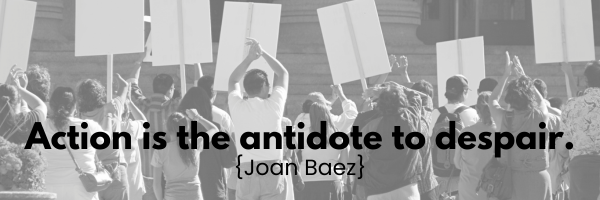
Excerpt from Vegan Minded: Becoming a Steward for Animals, People, and the Planet.
Before Roe v. Wade was overturned, I used to see two anti-abortion activists protesting in front of the Planned Parenthood office when I would drive into town. And while I do not agree with them, I think they were brave. I wouldn't do that. I don’t like to stand out. In my first year as a vegan, I protested at the Lincoln Park Zoo in Chicago with other animal rights activists after attending a PETA conference. And, on Black Friday of that same year, I marched down Michigan Avenue, the Magnificent Mile, with all its fancy shops, to protest wearing fur. Even though I wholeheartedly believe in these causes, none of these activities resonated with me. It felt forced and forceful. I thought this is what I had to do now that I was vegan—speak out loudly and boldly on the injustices animals faced every day. It’s important that some people do. What is more important is that each of us finds our own way to raise awareness for social injustices and speak up for those who can’t speak for themselves. In my case, I want to speak up for nonhumans and the planet. Others will speak up for humans facing injustices. There is no shortage of inequities and infringements in the world. There is a cause for everyone. Ultimately, I'm a quiet and introverted vegan. While I have attended many marches for various causes since that first year, it is not my preferred form of activism. These actions don’t resonate with me. I don’t think I will change the hearts and minds of anyone when I’m uncomfortable myself. It took a while for me to learn this.
I enjoy talking with people one-on-one or in small groups, so I started a veggie dinner club for my friends and me that first year as a vegan. We visited restaurants all over Chicago that served vegan food, experiencing delicious international foods like Ethiopian, Indian, and Middle Eastern. I eat a much wider variety of foods as a vegan than I ever did before. The group was open to anyone interested in eating vegan food, even if only for that one meal. One evening, a small group of us sat at a Mexican restaurant that had worked with a local animal welfare group to add substantial vegan options to the menu. I wanted to support this effort, so when one of my friends asked if he could order chicken, I responded by saying, “That’s not in the spirit of the dinner club.” We were friends, so he understood. We hung out regularly at nonvegan events, but sadly, he chose not to attend any more outings like this. Not everyone is ready to eat vegan. And yet, I know that feeding people vegan food is a powerful tool for growing the movement, so this form of activism was fun for me to organize and plan.
Activism is required for change to happen. Martin Luther King, Jr., said that "the arc of the moral universe is long, but it bends toward justice,” but only if we all do something about it, and in whatever way resonates. This is true for any cause. I talk about this with Bill often. Lately, I feel like we’re living in a vacuum after staying home for much of the past couple of years due to the pandemic. I know I need to act, do something for a cause important to me: mainly animal welfare and climate change. There are many more causes I’m interested in, but these two are clearly close to my heart.
There are times when activism feels hopeful and encouraging, and there are times when it feels hopeless. There are many s/heroes in the animal rights movement, but high on that list are the undercover investigators who take jobs on factory farms to film what is happening behind tall fences and closed doors. These folks work undercover—in cruel conditions and with some people who willingly harm farmed animals—to build a case against factory farms. They see workers slam piglets against the floor, grind up male chicks while they are alive, and many other egregious behaviors, all in an effort to make these conditions known to the public, to shed light on a hideous industry. Because of these successful public campaigns where undercover video from factory farms is shared on the internet and the nightly news, the animal agriculture industry lobbies hard for “ag-gag” laws, which make it illegal for anyone—think activists and journalists—to film inside industrial farming facilities. These undercover videos have been incredibly important in making the general public aware of the animal cruelty in these operations. When ag-gag laws were enacted, it felt discouraging. And yet, activists have fought successfully in many states to have these laws overturned, bringing me back around to feeling hopeful. Most people are not going to go undercover, but most people can write their representatives and let them know they do not support ag-gag or other antianimal laws in their state. Whichever way the arc is bending—toward justice or not—we must keep going, heading toward the future we envision. I visualize a world where we care for everyone despite the differences in appearance, location, age, education, religion, interests, and so on. In the world that I hope for, we take care of each other. We feel safe. We decide to choose optimism. It sounds like a fantasy. We’re not there—yet.
Another example—this one when the arc leans toward injustices—is when President Trump pulled out of the Paris Climate Agreement. That was a gut punch to everyone concerned about the climate crisis, but the people who were committed to solving it kept going. We didn’t give up because we must continue to act, no matter what world leaders are doing. Thankfully, newly elected President Biden immediately rejoined the Paris Climate Agreement. Once again, I felt hopeful. Biden went on to pass the Inflation Reduction Act, the largest investment in climate protection in US history. More hopeful, still.
There is a concept called hopepunk, a term coined by writer Alexandra Rowland. “Hopepunk says that genuinely and sincerely caring about something, anything, requires bravery and strength. Hopepunk isn’t ever about submission or acceptance: It’s about standing up and fighting for what you believe in. It’s about standing up for other people, [other animals, and the planet]. It’s about DEMANDING a better, kinder world, and truly believing that we can get there if we care about each other as hard as we possibly can, with every drop of power in our little hearts.” And, the work never ends.
To be clear, the arc of justice is always bending, and which direction it bends toward depends on who is acting and for what. To protect animals and the environment, much needs to be done, and there are many actions quiet activists can do:
- Vote in every election. Voting is a form of activism. Never, ever think your vote doesn’t count. While we really need to do away with the electoral college for the presidential election, your vote matters in every local, state, and federal election. Research who is running for office and vote for the candidates that support animal welfare laws and climate-friendly legislation.
- Vote with your dollars. How we spend our money influences what companies sell. With every purchase and investment, we can vote with the animals and the planet in mind. Every time we buy something, we are telling that company we want more of it, so buy animal- and environmentally-friendly products. Consider buying locally and supporting small businesses too. Ultimately, buy less stuff. Every dollar we spend is a vote that says “do it again.”
- Write to your representatives. There are many animal welfare and environmental organizations that will alert you when a new piece of legislation is on the docket. Write to your representatives and ask them to vote to support your position. They work for you, after all.* Register for action alerts. Sign petitions and join letter-writing campaigns through nonprofit organizations. Write to corporations also. Tell them what kind of products you want to buy.
- Take action at work. Get a job in the animal advocacy or environmental protection fields. We can also make our current job an animal or climate job by using our influence to change things at the office. For example, if you work at a school, hospital, or anywhere that serves food, ask for more plant-based options. If your job involves selling products packaged in plastic, seek out alternatives and campaign for your company to switch to ecofriendly packaging. You can also opt to donate a percentage of your income to help nonprofit organizations making a positive impact for animals, people, and/or the planet. Be sure to research the organizations you are interested in to see how they will spend your hard-earned dollars. Some organizations are more impactful than others. Check to see if your company offers a matching donation.
- Change your diet. Not yet vegan? Then take a pledge and try vegan for a month. Veganuary is a comprehensive program you can start in January and will easily support a New Year’s resolution. There is also No Meat May for those who missed Veganuary. And, ProVeg offers a thirty-day veg challenge any time of year with their downloadable app. If one month seems long, then try the Physicians Committee for Responsible Medicine 21-day Kick Start. Maybe joining the reducetarian movement sounds doable. More options are available on the Plant-Based Treaty website.
- Share vegan food with others. If you are already vegan, feed vegan food to everyone you know. Invite them over for dinner, take friends out to a vegan restaurant, host a potluck, or bring a vegan dish to share when you are invited to someone’s house. For me, this often happens at my neighborhood wine-thirty, which I secretly call “happy hour activism.” I like to bring delicious vegan options, like hummus and a dessert. Vegan cheeses have been hit or miss, so I’m more careful about those selections. At the holidays, Bill and I spend one Sunday in December baking Christmas cookies, which we promptly shared with several families in our neighborhood, none of whom are vegan. This has become an annual event for us—a way to build community through our vegan food. Each year we aim to expand our giving to more neighbors. When we invite nonvegans over for dinner, we lean toward offering options that do not include any unusual or potentially controversial ingredients, like soy, tofu, tempeh, seitan, and vegan cheese. We choose to center fresh whole foods that most people eat on a regular basis anyway, such as pasta e lenticchie (pasta and lentils), a classic Italian dish. Normalize eating vegan food with everyone you know.
- Learn to cook. If you don’t know how to cook, learn. Read cookbooks, watch cooking shows, or take classes. Ask a friend to teach you. We really only need to know how to make about ten to fifteen dishes to get enough variety in our diets. Start by learning one dish, then another, and another, until you are well-equipped to eat at home more often.
- Grow a vegetable garden. Tending to plants is a rewarding venture in its own right, but when you pick a tomato to eat at lunch a few minutes later, you will feel a sense of real accomplishment. You can even compost your food waste and add it back to your garden. You don’t need a lot of outdoor space to grow something. If you don’t have any outdoor space, look for a community garden in your neighborhood.
- Write to local restaurants and grocery stores. Let them know you expect more plant-based options, and then be sure to frequent these businesses to support them with your voting dollars. But avoid fast food restaurants and takeout to reduce packaging waste whenever possible. Make eating most meals at home the norm. Have fun with picnics and potlucks.
- Support vegan restaurants and other vegan businesses. Get to know the people who own and work at these restaurants. Bring your nonvegan friends. If you eat out a lot, use the Happy Cow app to find vegan restaurants, and also contribute to it. Wherever I go, I frequent vegan establishments to not only support them but to meet like-minded friends. Participate in making the world more vegan.
- Use your voice. Talk one-on-one with your neighbors, friends, and family about the issues that matter to you. Introverts love deep conversation with just one or two people at a time. Keep your emotions in check though. They may not agree with you. That’s okay. If this feels uncomfortable for you, practice with a supportive friend. The Humane League hosts a monthly online gathering, Effective Communication for Animal Advocates, to practice with other like-minded and caring folks. As your confidence grows, start planting seeds. Change takes time.
- Electrify your home. If you are able to, switch to electric appliances, solar, and heat pumps. If switching is not currently an option, call your power company and ask for the renewable energy option.
- Leave the car at home. Walk, bike, or take public transit when possible. Just like voting with your dollars, every time we avoid using fossil fuel, we reduce the demand for it. Consider buying an electric vehicle or e-bike when it makes sense for your family.
- Fly less often. Instead of flying to faraway exotic vacations, enjoy a staycation exploring where you live. Another possibility is to travel by train. I’m lucky to live in the Pacific Northwest and can explore the nooks and crannies of this area for years to come.
- Volunteer. Choose a local organization and make a difference with your free time. You might meet new friends and enjoy giving back to a cause you care about. The reward is in the giving. For many years, I volunteered with an animal shelter, caring for cats and adopting out dogs. I looked forward to my shifts every week. I made new friends and helped find homes for many cats and dogs. Most of the volunteers at the shelter ate meat. They had yet to make the connection between caring for animals called pets and eating the animals called dinner, all of which are sentient beings. Perhaps I influenced them just a bit by being one of the few vegans who volunteered there.
- Check out your library. Before I buy a book, I check if my library carries it. If you do buy books, whether they are used or new, consider sharing them with friends or in a sharing library in your neighborhood. Don’t let books sit unread on a shelf in perpetuity. Books are for sharing and meant to be read. I installed a sharing library in front of our house because reading is one of the easiest ways to stay educated on important subjects, like climate change and the food system. While I distribute a lot of fiction in my little library, you can be sure that I’m regularly adding vegan and climate change books too. Being educated is also a form of activism.
- Host a book club or “salon”. Let’s bring back salons where intellectuals gathered to discuss ideas, but let’s make them accessible for everyone. Read books with friends that tackle social justice issues, like the climate crisis. Discuss the topics, make a plan, and take action together or individually. You could start with this book and enjoy a plant-based meal together. (Christine is available to attend book club discussions via video conference. See the back of this book for details.)
- Say no to fast fashion. Simplify your wardrobe with classic pieces that won’t go out of style. Getting caught up in the latest trends and styles creates an infinite cycle of waste. Instead, wear and maintain your clothes longer. When you do need something new, trade with friends or frequent thrift and second-hand stores for unique items and make them your own. Better still, upcycle the clothes you already own. A quick internet search will give you loads of ideas.
- Create art and share it. Build a sculpture. Paint a picture. Write a book or poem or song. Make a protest poster. Whatever issue is on your mind, create something that educates or inspires others to change. I love public transportation, especially trains and ferries. They are my favorite way to commute from here to there, but where I live, we only have buses to get around our town and county. The ferries are for getting to and from Seattle, which is on the other side of Puget Sound. Two artists in town recently were inspired to create a subway map4 for Kitsap County, where I live. Not only did they design it, but they printed copies for people to buy. This map is an idea, a solution for our lack of mass transit and the growing traffic congestion. The train doesn’t exist, and before seeing this map, I never considered it even possible to have a train in this small city. While it seems far-fetched, it also feels hopeful. I bought a print, which now hangs above our sofa. Every time I notice it, I’m reminded to be open to possibilities. Bill even submitted the map to the local planning commission after attending a meeting. The map will be saved in the meeting records. Action leaves traces.
- Join a craftivist collective or start one. The term craftivism was coined by Betsy Greer in 2003. Craftivism is where arts and crafts meet activism. Sarah Corbett, founder of the Craftivist Collective, creates campaigns, especially around the climate crisis, that get to the heart of the matter in beautiful and creative ways. The Craftivist Collective stitches messages on pins and mini-banners to send to politicians. Craftivists create art and crafts (or even food to share) to champion their causes. It’s a creative way to get a message across for sure. I used to be in an art group. We created a new project each month. One month, we were invited to create artist trading cards to share with each other. The theme was “flowers for a friend.” I took a little liberty with the theme and created ten cards with the message friends don’t let friends eat meat. I cut out images of vegan food from magazines to decorate each card. This was my first attempt at craftivism. Remember the Women’s March in 2017, when women all over the world knitted pink hats with ears and wore them to a march and many places after that? That is craftivism.
- Support people who don’t look like you, including folks with different experiences and life circumstances. Read books, watch movies and television, and listen to music written by people of color, women, and LGBTQIA+ folks. Break out of your bubble and expose yourself to diverse voices. Focus on connection and learn from their stories.
- Use just words. Practice using inclusive and peaceful language in all forms of communication. When writing this book, I considered language and how I can use it to bring folks together. Use animal-friendly language. For example, instead of saying “kill two birds with one stone,” you could say “feed two birds with one scone.” You may have noticed that in this book, I often refer to animals as nonhuman animals; that is because we are all animals, even humans. When referring to people, use correct pronouns and gender neutral language. Commit to evolving with language. All of this might feel strange at first, but the more we normalize inclusive and nonviolent language, the easier it will become to use it.
- Use your imagination. As I worked on this book and considered what a brighter future might look like, I often thought, When do I have time to imagine this new world? We live in a busy world. I’m busy. You’re busy. We’re all busy! But if we want to create a world where we can all flourish, we are going to need to slow down and make time for imagining something different. I’ve started to look more closely at my life and how I spend my time. When I think I’m too busy for something that’s important, I know I need to shift my priorities. The world we currently live in was once imagined and we can change the world using our creativity and resourcefulness, just like our ancestors did. Make time to daydream. It’s a necessary step toward changing the world and the systems that support it.
If this chapter sparked an idea that requires funding, there are organizations that provide small grants to individuals. You might be able to find support for your project through the following organizations:
- VegFund
- The Pollination Project
- The Awesome Foundation (vegan chapter)
- Culture & Animals Foundation
- EA Funds: The Animal Welfare Fund
This list is not comprehensive but a good starting point. Don’t let money stop you from doing something awesome. You might also consider a crowdfunding campaign on the platform of your choice.
While you may think one person can’t change the world, I don’t believe that’s true. There’s a lot of conversation around individual “performative” actions being futile, like recycling, and that what we really need is systems change—big, bold change—but people change the world.** You can change the world. One person’s efforts do matter, and that is how we are going to change the systems that desperately need it. David Brooks writes in the New York Times, “Social transformation flows from personal transformation.” Sometimes it’s easy to think what we do individually doesn’t matter, but it does. Behaviors perpetuate systems. If we want to change the food system and address the climate crisis, we need to cultivate the mentality that our actions matter. Because they do. People change the world. You and me. All of us.
So, write to your senator, start or run a vegan company, talk to your neighbors, veganize your workplace, or buy a used bike and start riding it. Do something. Do anything. And keep a sustainable mindset, so you can keep going. When I’m tired and run-down, I care less—about everything—and I don’t make good decisions. Rest when you need it, and act when you are well rested. This is a marathon, not a sprint. Consider your role as an activist or change-maker as a way to protect what you love, whether that is animals, the environment, or your family, friends, neighborhood, and community. There is a role for everyone, even us quiet ones.
* A fellow student in grad school created a useful website for lobbying on the behalf of animals: Civic Engagement for Animal Laws (CEAL).
** Lowrey, Annie. “All That Performative Environmentalism Adds Up.” The Atlantic. Atlantic Media Company, October 15, 2020.
Christine Cook Mania | NOV 25, 2024
Share this blog post
 OfferingTree